
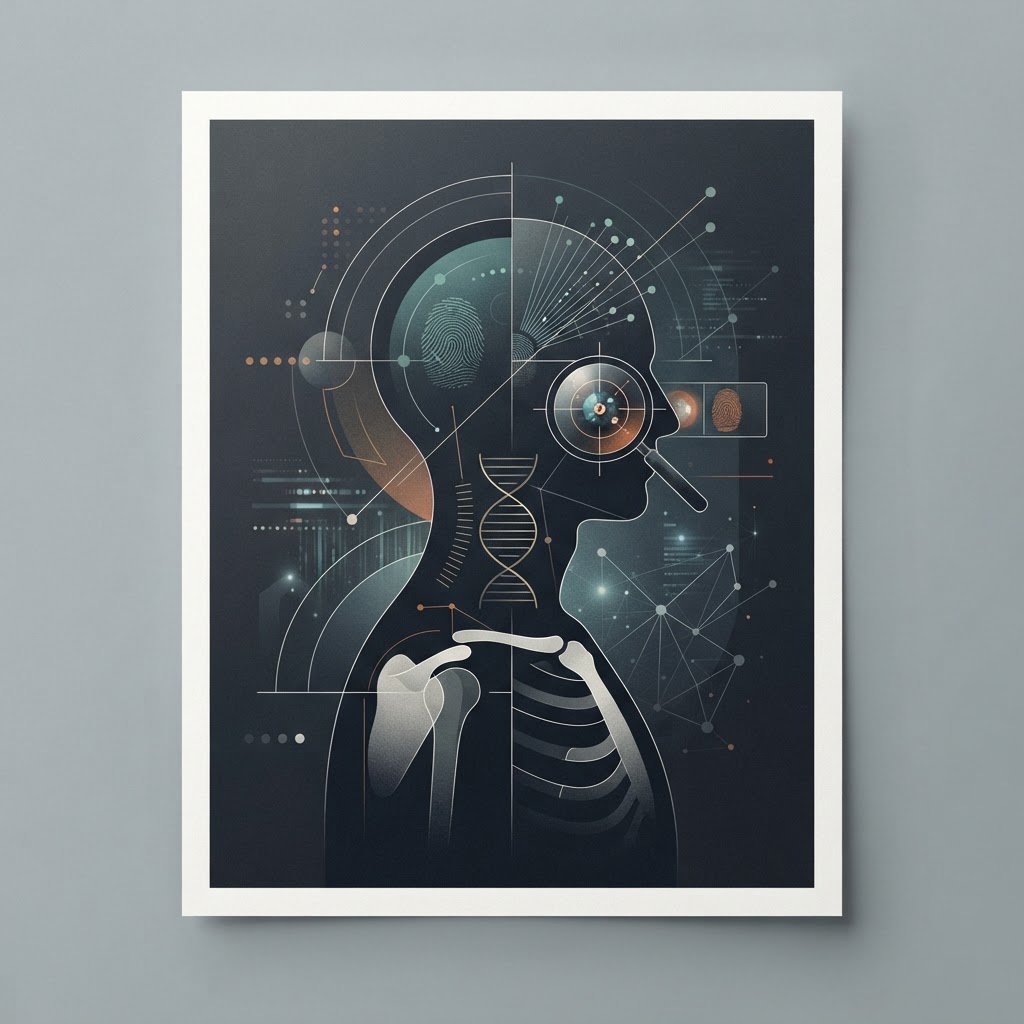
The Certainty Illusion: How Forensic Science's Unvalidated Methods Have Shaped — and Shattered — Criminal Justice
Decades of courtroom reliance on forensic techniques that were never rigorously validated have contributed to wrongful convictions, systemic bias, and a crisis of scientific credibility. The data reveals a field in urgent, overdue reform.
The Certainty Illusion: How Forensic Science's Unvalidated Methods Have Shaped — and Shattered — Criminal Justice
In May 2004, the FBI announced with absolute confidence that it had found a fingerprint match — a "100 percent" identification, in their own words — linking Brandon Mayfield, a quiet Oregon lawyer, to the Madrid train bombings that had killed 193 people. The match was wrong. Spanish authorities identified the actual suspect weeks later, and the FBI was forced to issue a rare, formal apology. What had gone wrong was not a failure of technology alone. It was a failure of epistemology: a trained examiner, anchored by early certainty, had unconsciously filtered all subsequent analysis through a lens of confirmation. The evidence had not spoken. The examiner had.
The Mayfield case is not an outlier. It is, in the language of data analysis, a signal — one data point in a pattern that, when examined in full, reveals a structural problem at the heart of forensic science.
The 2009 Watershed: A Field Puts Itself on Trial
The modern reckoning with forensic science's limitations has a clear reference point: the 2009 report by the National Academy of Sciences (NAS), titled Strengthening Forensic Science in the United States: A Path Forward. Its central finding was striking in its candor. With the sole exception of nuclear DNA analysis, no forensic discipline had been rigorously shown to consistently and with a high degree of certainty demonstrate a connection between physical evidence and a specific individual.
Read that again slowly. Fingerprint analysis. Hair comparison. Bite mark analysis. Toolmark examination. Ballistics. Fiber analysis. All of these methods — many of which had been admitted into courtrooms for decades, some for over a century — lacked the peer-reviewed, statistically validated foundation that defines legitimate science. They had been accepted not because they had passed rigorous empirical testing, but because courts had accepted them before, and legal precedent had done the work that the scientific method had not.
This is the core tension that the NAS report exposed: forensic science operates at the intersection of legal finality and scientific revision, and those two systems have profoundly different relationships with uncertainty. Science demands that conclusions remain provisional, subject to new evidence. The courtroom demands a verdict. That structural incompatibility, left unaddressed for generations, created the conditions for systematic error.
The Human Variable: Bias, Blind Spots, and Broken Chains
If validation is the first problem, human cognition is the second. Research into forensic examiner behavior has documented a phenomenon known as contextual bias — the subconscious alteration of an analyst's interpretation of physical evidence based on exposure to irrelevant case details. In plain terms: tell an examiner that a suspect has already confessed, and the examiner is more likely to find a match in ambiguous evidence. The evidence does not change. The perceiver does.
This is not a moral failure. It is a cognitive one, rooted in the same heuristic mechanisms that make human pattern recognition powerful and efficient. But in a forensic context, where the stakes are a person's liberty or life, that cognitive efficiency becomes a liability without proper structural controls.
The FBI's own internal audit, released in 2015, made the scale of this problem concrete. Investigators reviewed cases handled by the bureau's elite microscopic hair comparison unit and found that examiners had given flawed testimony — overstating the significance of hair evidence — in more than 90 percent of the cases examined, spanning a two-decade period. These were not rogue actors. They were trained professionals operating within a system that had never established the statistical frameworks necessary to quantify what a hair match actually meant.
The Bite Mark Problem: A Case Study in Junk Science
No area better illustrates the compounded failure of validation and oversight than bite mark analysis. The 2016 report by the President's Council of Advisors on Science and Technology (PCAST) was unambiguous: bite mark analysis lacks foundational validity and is scientifically unreliable for identifying suspects. The method rests on two assumptions — that human dentition is unique, and that skin reliably records bite patterns — neither of which has been established through systematic research.
Keith Harward spent 33 years in prison for a crime he did not commit. The primary evidence against him was the testimony of forensic odontologists who matched his teeth to bite marks on a victim. In 2016, DNA testing proved it was impossible for Harward to have been the source of that evidence. He was exonerated at age 59. The science that imprisoned him had never been science at all.
The Cameron Todd Willingham case carries an even more irreversible weight. Willingham was executed in 2004 for the arson deaths of his three young daughters. The prosecution's case rested heavily on fire pattern analysis — burn marks, pour patterns, and char indicators that examiners testified were conclusive signs of deliberate arson. Years later, leading fire scientists reviewed the evidence and determined that the forensic conclusions were based on myths and folklore that the field had since abandoned. Willingham had been executed on the basis of debunked methodology. The state of Texas has never formally acknowledged the error.
When the Lab Itself Becomes the Contamination
Sometimes the failure is not methodological but institutional. The Annie Dookhan scandal in Massachusetts is perhaps the most catastrophic single-laboratory failure in American legal history. Dookhan, a chemist at the Hinton State Laboratory, was found to have falsified drug test results, forged signatures, and "dry-labbed" evidence — certifying tests she had never actually performed — across more than 34,000 cases over nearly a decade. The fallout triggered the largest mass dismissal of criminal convictions in U.S. history. Thousands of cases were thrown out. Defendants who had served sentences, some for years, had been convicted on fabricated science.
The Dookhan case illustrates a dimension of forensic failure that receives less attention than methodological critique: institutional oversight. Labs that process hundreds of cases per analyst, per month, under production pressure, with inadequate supervision, create conditions where errors — and in extreme cases, fraud — go undetected.
DNA: The Gold Standard With Feet of Clay
DNA profiling stands apart from other forensic disciplines in one critical way: it has genuine, validated statistical foundations. The probability calculations underlying a DNA match are grounded in population genetics research, and when properly performed, the method's reliability is extraordinary. It is, appropriately, the tool that has exonerated the wrongly convicted and identified the guilty.
But even DNA analysis is not immune to human error. Sample contamination during collection or processing can corrupt results. The interpretation of "touch DNA" — genetic material transferred through incidental contact — is particularly fraught, as these samples frequently contain contributions from multiple individuals, complicating or potentially misleading analysis. DNA evidence tells a probabilistic story. That story still requires a careful, unbiased narrator.
According to the Innocence Project, misapplied forensic science is the second most common contributing factor to wrongful convictions, appearing in approximately 52 percent of cases that were later overturned by DNA testing. Fifty-two percent. That figure encompasses real people, real sentences, real years of life consumed by errors that scientific rigor and institutional accountability could have prevented.
The CSI Effect: When Public Perception Distorts Justice
Layered atop these technical and institutional problems is a cultural one. Research into juror behavior has documented what criminologists call the "CSI Effect" — a distortion of jury expectations driven by decades of procedural crime dramas that portray forensic technology as both infallible and instantaneous. Studies suggest that nearly 40 percent of jurors now expect to see some form of scientific evidence in every criminal case, and that absence of such evidence — even when the case rests on solid circumstantial proof — causes significant reasonable doubt.
This creates a paradox. Jurors who have absorbed a fictional understanding of forensic certainty may be simultaneously more credulous when scientific-sounding testimony is presented and more skeptical when it is absent. Prosecutors in some jurisdictions have begun calling "negative evidence witnesses" — experts whose sole function is to explain to juries why forensic evidence was not collected or why its absence is not exculpatory. The legal system is now allocating resources to counteract a myth that entertainment created.
The Path Forward: Blind Testing, Quantified Uncertainty, and Honest Limits
Reform is underway. The push toward "linear sequential unmasking" — structuring forensic analysis so that examiners interpret physical evidence before receiving any contextual case information — directly addresses the contextual bias problem. Blind proficiency testing, where analysts do not know they are being evaluated, provides more accurate measures of error rates. Some jurisdictions are moving toward probabilistic genotyping software and likelihood ratio frameworks that express forensic conclusions as statistical probabilities rather than binary matches.
But reform is uneven, underfunded, and complicated by a legal system that is slow to revisit precedent. Methods that were admitted into evidence a generation ago remain admissible today, often because challenging them requires resources that public defenders rarely have.
The evidence behind forensic science tells a story that is neither a condemnation of the field nor an endorsement of the status quo. It is a story of a discipline that grew faster than its foundations, that served the legal system before it fully served the scientific method, and that is now undertaking the difficult, necessary work of honest self-examination. The question is whether that reckoning is moving fast enough — and whether the cases already decided by its flawed past will ever receive the scrutiny they deserve.
Comments (0)
No comments yet. Be the first to share your thoughts.
Follow Us
© 2025 The Evidence Log. All rights reserved.
Sponsored by www.MilitaryDiscount.net
Website Designed By CharmCityInteractive.com