
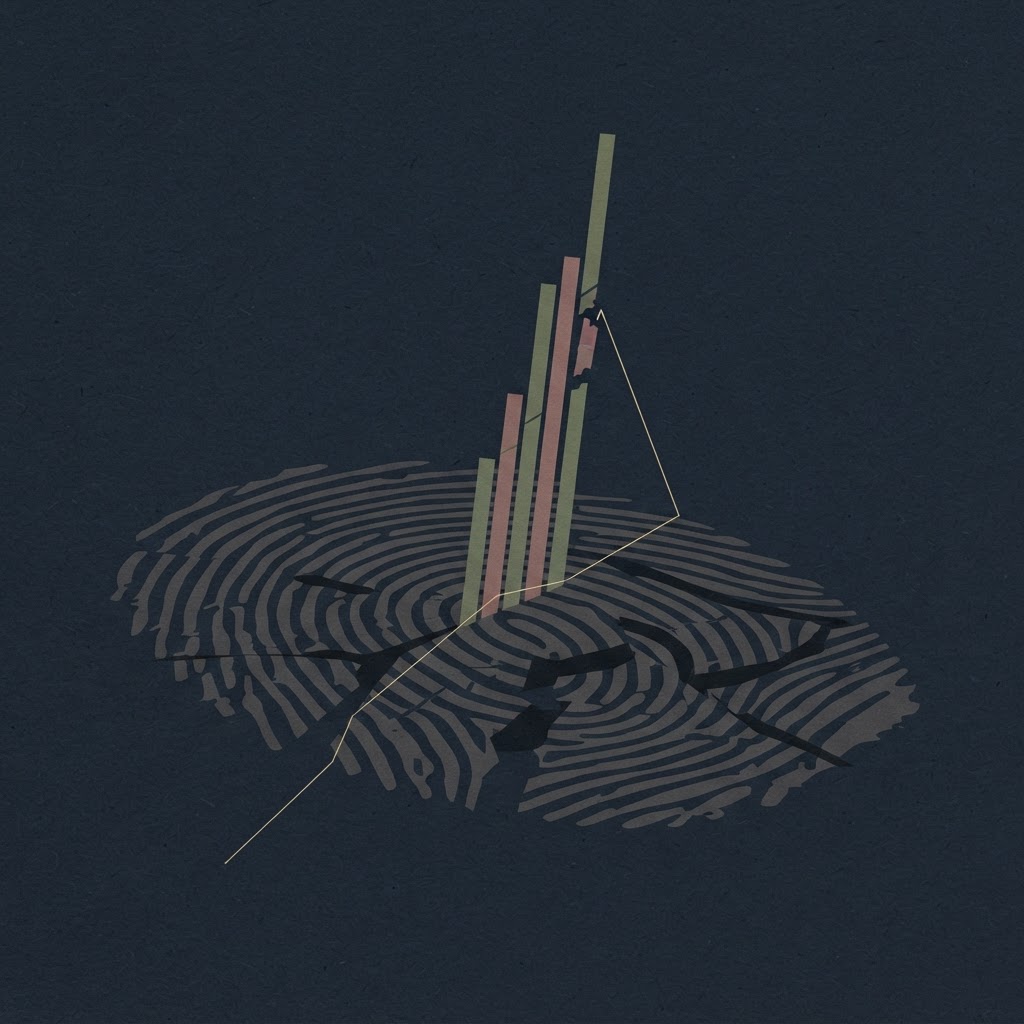
The Certainty Illusion: How Flawed Forensic Evidence Sends Innocent People to Prison
From bite-mark analysis to microscopic hair comparison, a growing body of scientific research has exposed the fragile foundations beneath the forensic methods routinely presented as infallible truth in American courtrooms.
The Certainty Illusion: How Flawed Forensic Evidence Sends Innocent People to Prison
In a courtroom, a forensic expert takes the stand. They speak with authority, cite years of specialized training, and present their conclusions with the quiet confidence of someone who has done this many times before. To a jury, this person represents science itself — objective, precise, and beyond reproach. What the jury rarely hears is the other story: that the method the expert is describing may have never been rigorously validated, that their conclusions could shift depending on what they were told before examining the evidence, or that dozens of innocent people have already been imprisoned based on identical testimony.
This is the evidence behind flawed evidence.
A System Built on Unvalidated Science
The foundational problem is historical. Unlike medical diagnostics or pharmaceutical research, many forensic disciplines were not developed within academic institutions subject to peer review and replication standards. They grew instead from within law enforcement agencies, shaped more by investigative utility than scientific rigor. The result was a collection of techniques — microscopic hair comparison, bite-mark analysis, tool-mark examination, blood-spatter interpretation — that entered courtrooms carrying the weight of scientific testimony without the underlying scientific scaffolding to support it.
The 2009 National Academy of Sciences report made this explicit in terms that the legal community could no longer ignore. Its conclusion was stark: with the exception of DNA analysis, no forensic method had been rigorously shown to consistently and with a high degree of certainty demonstrate a connection between evidence and a specific individual. This was not a fringe critique. It was a landmark institutional assessment that called into question the evidentiary basis of convictions spanning decades.
Seventeen years later, the corrections are still underway.
Hair, Fire, and Bite Marks: Three Disciplines in Crisis
The Hair Analysis Scandal
Perhaps no single episode illustrates the scale of the problem more clearly than the FBI's 2015 admission regarding microscopic hair analysis. After a review conducted in partnership with the Innocence Project and the National Association of Criminal Defense Lawyers, the FBI acknowledged that nearly 90% of its elite forensic examiners had provided flawed testimony in hair comparison cases spanning more than two decades. The error was not random or isolated — it was systematic. Examiners had routinely overstated the significance of hair matches, implying a degree of certainty that the underlying science simply could not support. The review affected more than 250 cases, including numerous capital cases where defendants faced the death penalty.
Microscopic hair analysis, it turned out, was a matter of subjective visual comparison dressed in scientific language.
The Arson That Wasn't
The case of Cameron Todd Willingham offers a grimmer illustration. Willingham was executed in Texas in 2004, convicted of intentionally setting the fire that killed his three daughters. The prosecution's case rested heavily on forensic arson indicators identified by fire investigators: specific burn patterns, char formations, and what examiners described as evidence of accelerant use.
Subsequent reviews by leading fire scientists told a different story. The indicators that investigators had confidently labeled as proof of arson — the same indicators that sent Willingham to his death — were consistent with accidental fire conditions, specifically a phenomenon known as flashover, in which a room's contents ignite simultaneously due to radiant heat buildup. Research now compiled in standards like the National Fire Protection Association's NFPA 921 has demonstrated that features once treated as reliable arson signatures, including so-called "crazed glass" and "pour patterns," are often the natural byproduct of ordinary fire dynamics. The science had moved on. The courtroom had not.
Bite Marks: A Method Courts Still Allow
In 2016, the President's Council of Advisors on Science and Technology issued what amounted to a scientific condemnation of bite-mark analysis. The PCAST report found that the discipline lacked scientific validity and should not be used in criminal trials. The council noted that even experienced forensic odontologists — the specialists who conduct these analyses — frequently cannot agree on whether a mark is human or animal in origin, let alone whether it matches a specific individual's dentition.
Despite this, bite-mark evidence continues to appear in American courtrooms.
The Human Variable: Bias, Memory, and Pressure
The technical failures of forensic science are compounded by the measurable vulnerabilities of human cognition.
Contextual Bias in the Lab
Researcher Dr. Itiel Dror has spent years documenting how contextual information corrupts forensic analysis. In one particularly revealing study, fingerprint examiners — practitioners of one of the most widely trusted forensic disciplines — were given extraneous case information before reviewing prints. When told, for instance, that a suspect had already confessed, examiners changed their conclusions in 17% of instances compared to their own previous analyses of the identical prints. The prints had not changed. The science had not changed. The context had.
This is confirmation bias operating inside a forensic laboratory, and it has measurable consequences for the reliability of evidence reaching juries.
The Weight of a False Confession
Approximately 25% of all DNA exoneration cases involved a false confession, according to the National Registry of Exonerations. This statistic consistently surprises people encountering it for the first time. The intuitive assumption — that an innocent person would never confess to a crime they did not commit — is contradicted by extensive psychological research into interrogation dynamics. High-pressure techniques that exploit sleep deprivation, fear, and cognitive exhaustion can induce confessions from individuals who understand, on some level, that confessing will make their situation worse. The mechanism is not irrationality. It is a stress response to a system designed to produce compliance.
Once a confession enters the record, it colors everything else. Jurors weigh it heavily. Forensic examiners, consciously or not, may weight their findings toward confirmation.
Eyes That Cannot Be Trusted
Eyewitness misidentification represents the single greatest contributor to wrongful convictions in the United States, appearing in nearly 70% of cases later overturned by DNA evidence, according to Innocence Project data analysis. The Kirk Bloodsworth case is a precise illustration of how this works at its most consequential. Convicted of a 1984 murder and sentenced to death, Bloodsworth's guilt rested on the testimony of five eyewitnesses — all of whom were mistaken. There was no physical evidence connecting him to the crime. The eyewitness accounts alone were sufficient for a capital conviction.
Bloodsworth became the first American death row prisoner exonerated by DNA evidence. He had spent nearly nine years incarcerated for a crime committed by someone else, identified by five people who were certain they were telling the truth.
Memory research has since established clearly what Bloodsworth's case demonstrated in practice: human memory is reconstructive, not reproductive. It is shaped by suggestion, stress, post-event information, and the expectations of the people asking the questions.
The Systemic Failure and What It Demands
Forensic science errors contributed to approximately 45% of wrongful convictions later overturned by DNA evidence, according to the Innocence Project. That figure represents not just individual tragedies but a structural failure — the compounding effect of unvalidated methods, cognitive bias, and a legal culture that has historically treated forensic certainty as a feature rather than a variable.
The Annie Dookhan case at the Hinton State Laboratory in Massachusetts demonstrated how deeply trust in forensic authority is embedded in the system. Dookhan, a chemist, was found to have falsified drug test results through a practice called dry-labbing — identifying substances by sight rather than actually testing them — for years before discovery. Her actions compromised more than 34,000 criminal cases, triggering the largest mass dismissal of convictions in United States history. The scandal was enabled, in part, by the assumption that forensic results could be trusted without verification.
Addressing flawed evidence is not a matter of improving a single technique or removing a single bad actor. It requires the application of foundational scientific standards — blind testing, statistical validation, error rate transparency, peer review — to every discipline that presents itself to a jury as objective truth. It requires acknowledgment that the aura of infallibility surrounding expert testimony is itself a form of evidence contamination.
The data makes the case clearly enough. The question is whether the legal system will treat that data as evidence.
Comments (0)
No comments yet. Be the first to share your thoughts.
Follow Us
© 2025 The Evidence Log. All rights reserved.
Sponsored by www.MilitaryDiscount.net
Website Designed By CharmCityInteractive.com