
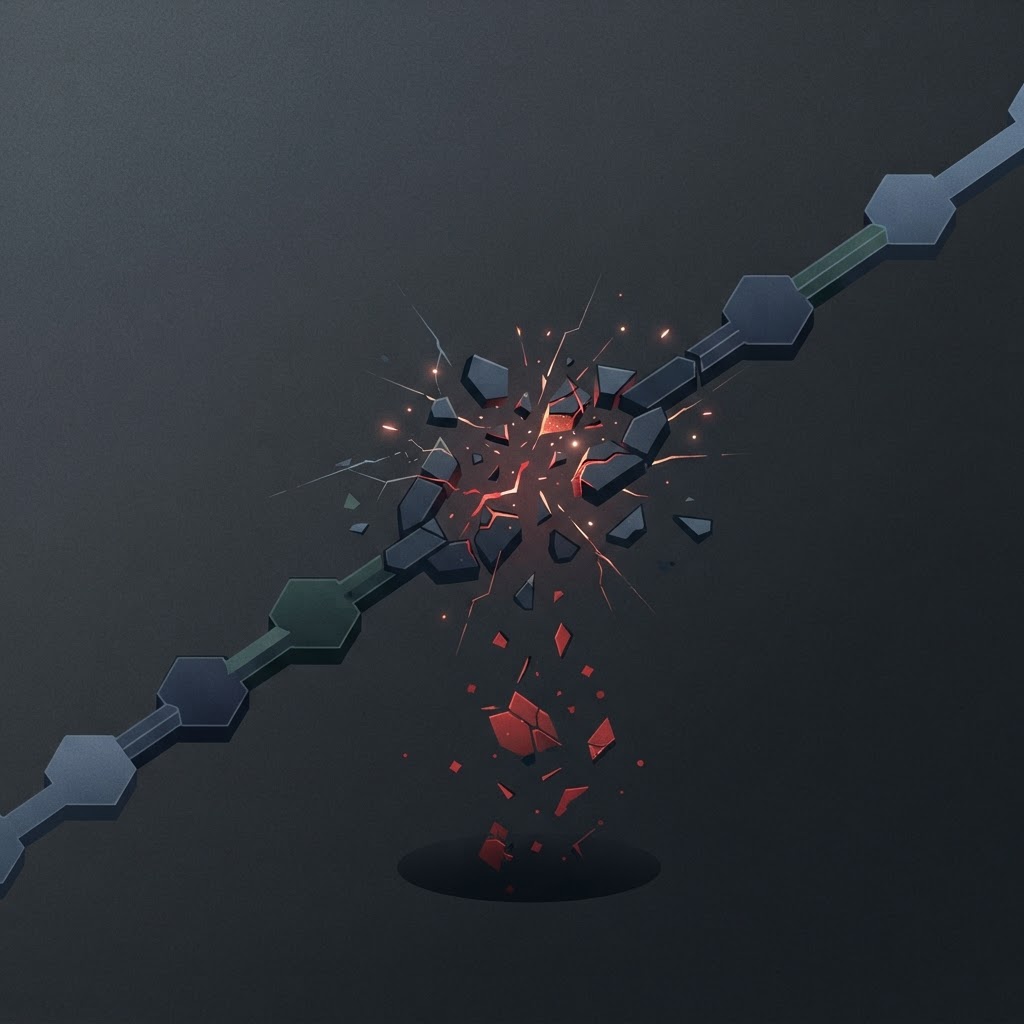
The Anatomy of Forensic Failure: How Bias, Bad Science, and Systemic Gaps Convict the Innocent
Flawed forensic evidence is rarely the product of a single mistake. A growing body of research reveals a deeply entangled system of cognitive bias, unvalidated methods, and institutional resistance that has contributed to hundreds of wrongful convictions.
When the Evidence Lies
In 2004, Brandon Mayfield, an Oregon attorney and U.S. Army veteran, was arrested in connection with the Madrid train bombings — one of the deadliest terrorist attacks in European history. The FBI's case rested on a single piece of forensic evidence: a fingerprint. Three senior fingerprint examiners, all experienced professionals, independently confirmed the match. They were wrong.
Spanish authorities had already identified the true source of the fingerprint — an Algerian national — but the FBI's examiners had become so committed to their initial conclusion that contradictory evidence failed to dislodge it. The Mayfield case did not occur because of incompetent analysts. It occurred because of something far more insidious and far more difficult to correct: cognitive bias embedded within a system that had no reliable mechanism to catch it.
This is not an isolated story. It is, according to accumulating data, a structural feature of forensic science as it is currently practiced.
The Scale of the Problem
The numbers are difficult to dismiss. A review of the first 225 DNA exonerations in the United States — cases where incarcerated individuals were conclusively proven innocent through post-conviction genetic testing — found that unvalidated or improper forensic evidence played a role in more than 50% of them. These were not cases where forensic science simply failed to find the truth. These were cases where forensic science actively pointed toward the wrong person.
A separate analysis of 732 wrongful convictions expanded the frame further, finding that forensic errors are not confined to laboratory scientists. They involve police officers, prosecutors, and defense attorneys as well. The failure is systemic, not individual. It propagates through every node of the criminal justice network.
Perhaps most striking is what happens at the level of the individual examiner. In controlled studies of handwriting comparison — a discipline routinely admitted in courts across the world — forensic examiners wrongly implicated an innocent person in one out of every eleven judgments, even under ideal testing conditions. One in eleven. In a field where the consequences are measured in years of human liberty, that error rate is not a footnote. It is a headline.
The Cognitive Architecture of Error
Researchers studying bias in forensic science have identified three broad categories of cognitive error: psychophysical errors, association-based errors, and strategy-based errors. Together, these categories describe how bias infiltrates not just the interpretation of evidence, but its collection and documentation as well.
Psychophysical errors occur at the perceptual level — analysts literally see patterns differently depending on what they expect to find. Association-based errors emerge when prior knowledge about a suspect (criminal history, race, socioeconomic background) colors an examiner's reading of neutral evidence. Strategy-based errors involve the methods analysts use to evaluate evidence, including shortcuts and heuristics that introduce systematic skew.
The most dangerous of these may be confirmation bias — the tendency to seek and weight information that supports an existing hypothesis. What makes confirmation bias particularly treacherous in forensic contexts is a counterintuitive dynamic: the bias intensifies when experts believe they are being objective. The more confident an analyst is in their own impartiality, the more susceptible they may be to uncritical acceptance of their initial conclusions. Expertise, in other words, does not inoculate against bias. In some configurations, it amplifies it.
This is precisely what occurred in the Mayfield case. The examiners were not careless. They were meticulous — and their meticulousness was applied in the service of a conclusion they had already reached.
The Typology of Forensic Error
Not all forensic failures look the same. Researchers have catalogued forensic error into several distinct typologies, each with its own pathway into the courtroom.
Misstatements in Reports
These occur when analysts describe findings inaccurately in written documentation, either overstating certainty or omitting qualifications that would contextualize the evidence. A finding described as a "match" when the analyst's methodology only supports "consistent with" is a misstatement — and one that can have dramatic consequences when a jury hears it.
Errors of Individualization
Individualization is the process of asserting that a piece of evidence — a fingerprint, a bite mark, a hair sample — came from one and only one source. Many forensic disciplines lack the empirical foundation to make such claims. Bite mark analysis, for instance, has been largely discredited as a reliable individualizing tool, yet it contributed to numerous wrongful convictions before its limitations were widely acknowledged. The assertion of individualization, when made without validated statistical support, transforms probabilistic evidence into false certainty.
Testimony Errors
In over 50 case studies of wrongful convictions, analysts were found to have overstated the probative value of evidence in court testimony. Analysts described findings as definitive when the underlying science supported only qualified conclusions. Some used language — "to a reasonable degree of scientific certainty" — that implied a rigor the methodology did not possess. Juries, untrained in the epistemology of forensic science, had no reliable basis on which to evaluate these claims.
Evidence Handling Failures
Chain of custody failures, mislabeling, contamination, and inadequate storage protocols compromise evidence integrity before analysis even begins. These are not glamorous failures. They are administrative. But their downstream consequences can be as severe as any laboratory error.
Institutional Resistance and the Audit Gap
Perhaps the most troubling dimension of the forensic error problem is what happens — or fails to happen — after a wrongful conviction is exposed.
Many crime laboratories do not conduct internal audits or investigations into forensic evidence following exonerations. When a conviction is overturned, the institution that produced the flawed evidence rarely undertakes a systematic review of other cases in which similar methods were applied by the same analysts. This represents a profound failure of accountability, and it means that each exoneration, rather than triggering a corrective cascade, tends to remain a contained anomaly.
The absence of internal audit culture is compounded by the absence of standardized error rates across most forensic disciplines. Unlike clinical medicine or aviation, where error rates are tracked, published, and used to drive procedural improvement, forensic science has historically operated without mandatory proficiency testing or public error rate disclosure. Evidence is presented to juries as reliable not because its reliability has been empirically demonstrated, but because no one has formally measured it otherwise.
The emerging deployment of AI-based predictive tools in law enforcement contexts introduces a new dimension to this problem. Algorithmic risk assessment instruments, used in bail determinations and parole decisions, have produced documented instances of racially biased outputs and wrongful risk classifications. These tools carry the additional epistemic hazard of appearing objective — numbers generated by software feel less contestable than the judgment of a human analyst — even when the underlying models encode the same structural biases present in historical criminal justice data.
Toward an Evidence-Based Forensics
The solution space is not mysterious. Researchers and reform advocates have identified several evidence-based interventions: mandatory blind verification protocols, in which a second analyst reviews evidence without knowledge of the first analyst's conclusion; required disclosure of error rates in court testimony; systematic post-exoneration audits; and the removal of forensic laboratories from direct organizational supervision by law enforcement agencies, which creates institutional pressure toward prosecution-friendly conclusions.
What is lacking is not knowledge of the problem, nor a shortage of proposed remedies. What is lacking is the institutional will to implement them at scale — and an honest reckoning with the degree to which the current system treats forensic certainty as an asset to be deployed rather than a claim to be rigorously tested.
The evidence behind the evidence, in this case, points in one direction: the system that produces forensic conclusions is not yet designed to reliably catch its own errors. Until it is, every verdict that rests on forensic testimony carries a margin of error that the courtroom does not acknowledge — and that the innocent cannot afford.
Comments (0)
No comments yet. Be the first to share your thoughts.
Follow Us
© 2025 The Evidence Log. All rights reserved.
Sponsored by www.MilitaryDiscount.net
Website Designed By CharmCityInteractive.com